


Communication & Language
Statutory guidance – what we have to teach
The EYFS sets out the ‘Educational Programme’ for Communication and Language:
Educational Programme : The development of children’s spoken language underpins all seven areas of learning and development. Children’s back-and-forth interactions from an early age form the foundations for language and cognitive development. The number and quality of the conversations they have with adults and peers throughout the day in a language-rich environment is crucial. By commenting on what children are interested in or doing, and echoing back what they say with new vocabulary added, practitioners will build children’s language effectively. Reading frequently to children, and engaging them actively in stories, non-fiction, rhymes and poems, and then providing them with extensive opportunities to use and embed new words in a range of contexts, will give children the opportunity to thrive. Through conversation, story-telling and role play, where children share their ideas with support and modelling from their teacher, and sensitive questioning that invites them to elaborate, children become comfortable using a rich range of vocabulary and language structures.


Our Communication and Language Curriculum
Supporting children to develop communication skills and language is a crucial part of our work at Whitegate. Children need to be able to communicate effectively with others, to make their needs and wishes known, to form meaningful relationships and to show their knowledge and understanding across the curriculum.
As they join our school at the age of two; many of our children have very limited language and some have no verbal communication at all.
Before a child has even started in school, we are building a picture of their interests and needs and so through discussion with each family we identify what communication skills and/or needs each child has. This means that we can fully support them to develop their skills quickly and effectively.
The classroom environment is communication rich. Adults model language constantly and consistently and work with individual children to facilitate them to communicate what they want or need. The adults continue to support children to develop these vital communication skills by skilfully scaffolding, building on previous learning and always being a communication role model.
When children leave our school, we intend for them to be able to communicate effectively with a range of different people. We want them to be able to take turns in conversation, and to be able to participate in group conversations effectively. We want them to have a wide and rich vocabulary and be excited by new and interesting words which they hear from books and stories.
We want our children to be active listeners. To be able to focus on what other people are saying and respond with ideas and thoughts of their own. We want them to be able to negotiate and use their language to resolve conflicts. We want our children to ask and answer questions of themselves and other people.
We know how important it is for our children that they know they are heard. We want children to feel confident to speak about things which are important. We want them to speak with clarity so that other people who might not know them as well as their teachers, friends and family can also understand what they are saying.
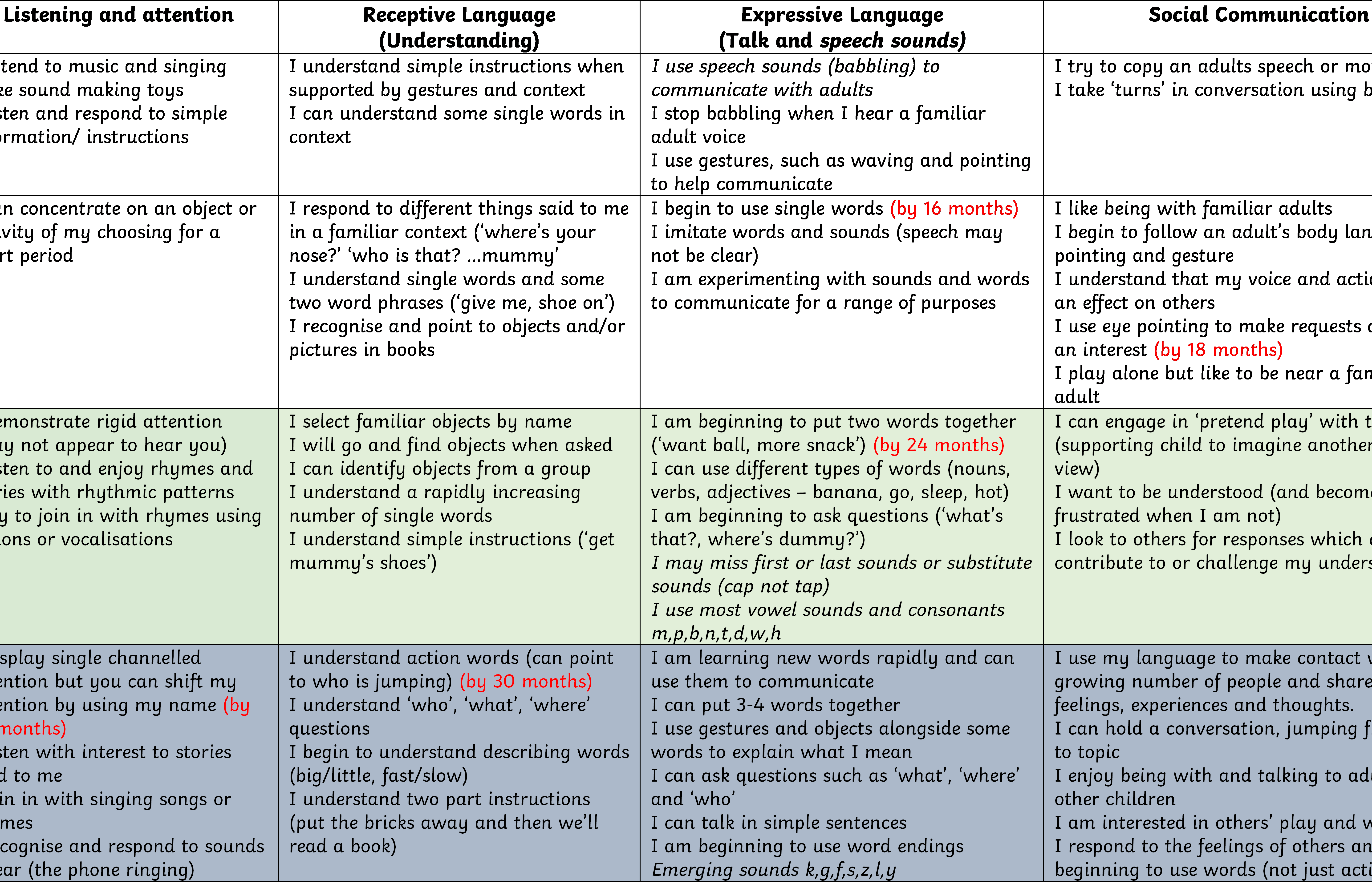
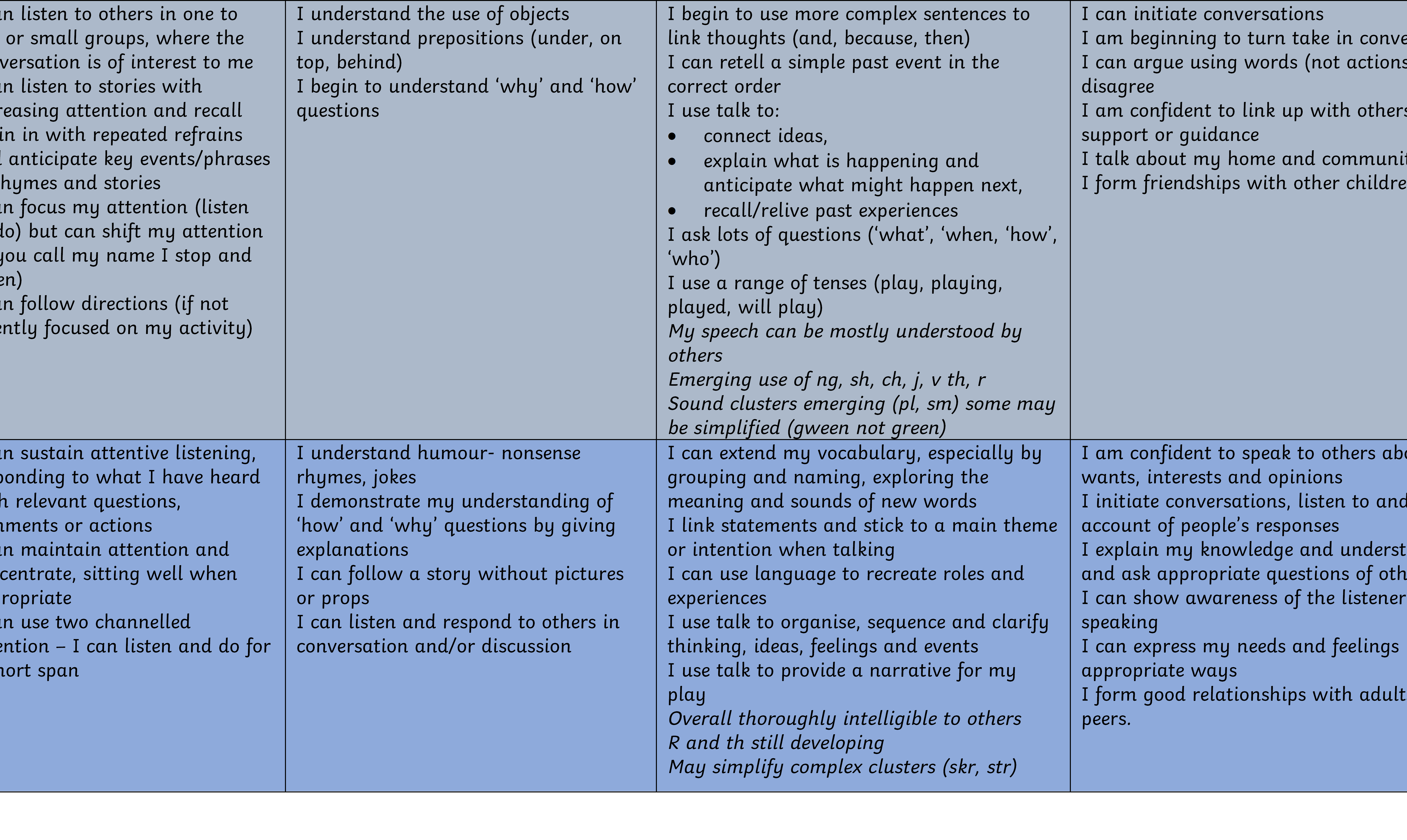
We have identified the key learning in Communication and Language based upon our knowledge of child development. We can identify whether a child is on track in their development and what their next steps should be using our learning sequences.